
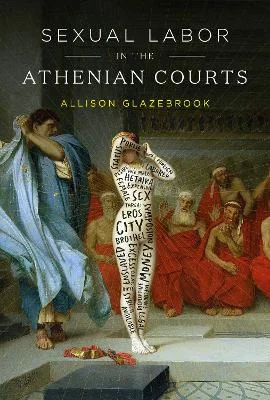
Description
By (author) Glazebrook Allison
:
Oratory is a valuable source for reconstructing the practices, legalities, and attitudes surrounding sexual labor in classical Athens. It provides evidence of male and female sex laborers, sex slaves, brothels, sex traffickers, the cost of sex, contracts for sexual labor, and manumission practices for sex slaves. Yet the witty, wealthy, and independent hetaira, well-known from other genres, does not feature. Its detailed narratives and character portrayals provide a unique discourse on sexual labor and reveal the complex relationship between such labor and Athenian society.
Through a holistic examination of five key speeches, Sexual Labor in the Athenian Courts considers how portrayals of sex laborers intersected with gender, the body, sexuality, the family, urban spaces, and the polis in the context of the Athenian courts. Drawing on gender theory and exploring questions of space, place, and mobility, Allison Glazebrook shows how sex laborers represented a diverse set of anxieties concerning social legitimacy and how the public discourse about them is in fact a discourse on Athenian society, values, and institutions.
Table of contents:
List of Figures
A Note to the Reader
Acknowledgments
Introduction
1. Under the Influence
2. In the Oikos
3. Part of the Family
4. Same-Sex Desire
5. Citizen Sex Slaves
Conclusion
Notes
Bibliography
Index
Review quote:
Allison Glazebrook does an especially nice job of explicating the complexities of Athenian juridical practices. Since these texts are rarely talked about, the chapters on Alke and Simon are welcome, especially the former because it points to patterns that recur in other rhetorical depictions of prostitution and significantly brings that text into the discussion of female sexuality and prostitution in ancient Greece.— Kate Gilhuly
Allison Glazebrook’s main contribution is to direct attention to the rhetorical and cultural constructions of sex laborers, male and female. Although the speeches discussed in the book have been studied extensively elsewhere, she manages to add new insights concerning Athenian anxieties about sex laborers and how they were manipulated by the orators.— Joseph Roisman
[Sexual Labor in the Athenian Courts] will be a valuable addition to the library of scholars in Athenian forensic oratory and ancient sexuality and gender.— The Classical Review
[A] splendid and important book…Glazebrook’s demonstration of the potential power of even enslaved sex laborers in Athens is a signal example of the many insights found in this volume. Scholars of Athens, and academics pursuing gender and liberation studies, are alike now indebted to Allison Glazebrook for an outstanding book, well-organized, well-researched and well-written, offering a pioneering approach to the writing of social history.— Bryn Mawr Classical Review
A valuable contribution to the field…[Sexual Labor in the Athenian Courts] is a book which will be valuable for new students of sexuality and gender in antiquity and for experienced scholars alike…Glazebrook provides a worthwhile discussion of how the portrayal of sex labourers is used by the orators to expose and test the tensions within Athenian social norms and institutions…the book’s streamlined focus constrains discussions to the Attic orators, resulting in a tight, focused and thorough exploration of sexual labour within the genre.— Journal of Hellenic Studies
Glazebrook’s writing is clear and to the point. The introduction’s explanation of the Athenian court system, with a map indicating potential locations of the courts, reveals two strengths of the book that will be found throughout: incorporating material evidence and maintaining accessibility for nonspecialists…The stand



Reviews
There are no reviews yet.